
Every Story is Unique, Every Journey Matters

Every Story is Unique, Every Journey Matters
 By Denise Bellville, RN, BS, Executive Director
October is Breast Cancer Awareness Month — a time when pink ribbons appear across our communities and conversations about screening, treatment, survivorship, and hope take center stage. But behind every ribbon is something far more personal: a story.
This year’s theme, “Every Story Is Unique, Every Journey Matters,” is an important reminder that breast cancer is never simply a diagnosis. It is an experience that unfolds differently for every person and every family.
For those of us in home care, that message has special meaning.
No Two Journeys Look the Same
For one person, the journey may begin with a routine mammogram and an unexpected diagnosis. For another, it may involve months of treatment, surgery, rehabilitation, or ongoing monitoring. Some individuals are celebrating years of survivorship, while others are living with metastatic disease. And for families who have lost someone they love, Breast Cancer Awareness Month can bring both treasured memories and renewed grief.
There is no single breast cancer story.
Every individual enters this journey with different needs, responsibilities, fears, support systems, and hopes. That is why person-centered care matters so deeply.
Home health and home care providers have the privilege of meeting people where life actually happens — in their homes, surrounded by the people, routines, and belongings that make that space uniquely theirs.
Caring for More Than a Diagnosis
When someone returns home following breast cancer surgery or treatment, recovery does not happen in isolation. There may be medications to manage, wounds to monitor, appointments to coordinate, mobility challenges to address, meals to prepare, and everyday responsibilities that suddenly feel overwhelming.
There is also an emotional journey taking place.
A person may be managing fatigue, changes in appearance, uncertainty about the future, fear of recurrence, or the simple frustration of not being able to do what they could do before treatment. Family caregivers may also be balancing work, children, household responsibilities, and their own emotions while trying to provide support.
This is where home-based care can make a meaningful difference.
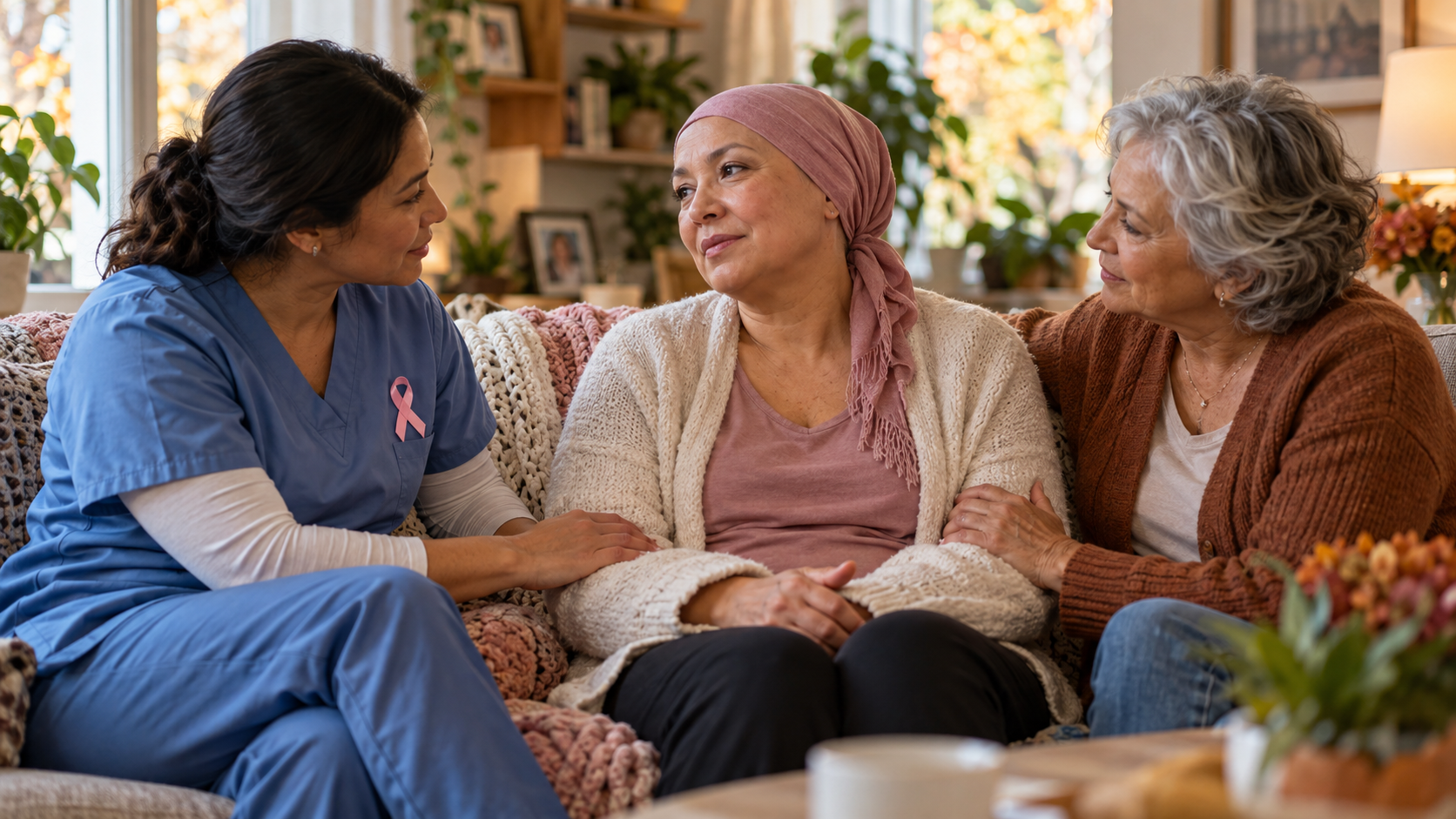
Nurses, therapists, home health aides, personal care professionals, companions, and other members of the care team can provide more than services. They can provide consistency, observation, reassurance, education, independence, and connection during a period when life may feel anything but normal.
Sometimes the most meaningful contribution is clinical expertise. Other times, it is helping someone safely complete a daily activity, noticing a change that should be reported, supporting a family caregiver, or simply taking the time to listen.
Those moments matter.
Awareness Must Lead to Action
Breast Cancer Awareness Month is also an opportunity to encourage the people we serve — and the people who serve alongside us — to make their own health a priority.
Awareness should encourage conversations about appropriate screening, knowing personal and family risk factors, recognizing changes that warrant medical attention, and maintaining regular communication with health care professionals.
For home care organizations, October can also be a time to educate staff about the needs of individuals affected by cancer and reinforce the importance of compassionate, individualized care.
The people working in patients' homes often develop relationships built on trust. That trust gives our workforce an extraordinary opportunity to encourage individuals to advocate for themselves, ask questions, follow their care plans, and stay engaged in their health.
Honoring Every Story
During Breast Cancer Awareness Month, we celebrate survivors. We support those currently undergoing treatment. We stand beside families and caregivers. We remember those we have lost. And we recognize the researchers, clinicians, health care professionals, advocates, and loved ones who continue working toward better outcomes.
As home care providers, we have another important responsibility: to remember the person behind the patient.
Every person we serve brings a lifetime of experiences into their care. They are parents, grandparents, spouses, friends, professionals, caregivers, neighbors, and members of our communities. Cancer may become one chapter of their story, but it does not define the entire story.
That is one of the greatest strengths of care delivered at home. We have the opportunity to see the whole person — not simply the diagnosis.
This October, I encourage our home care community to listen to those stories. Celebrate the victories, acknowledge the difficult days, support the caregivers, encourage appropriate screening and prevention, and continue providing the compassionate care that allows people to remain surrounded by what matters most.
Because every story is unique. Every journey matters. And every person deserves to feel seen, supported, and cared for along the way.